Social CRM
Social CRM integrates social media data and interactions into traditional CRM systems, enabling businesses to engage customers through real-time conversations across platforms like Facebook, Instagram, and LinkedIn.
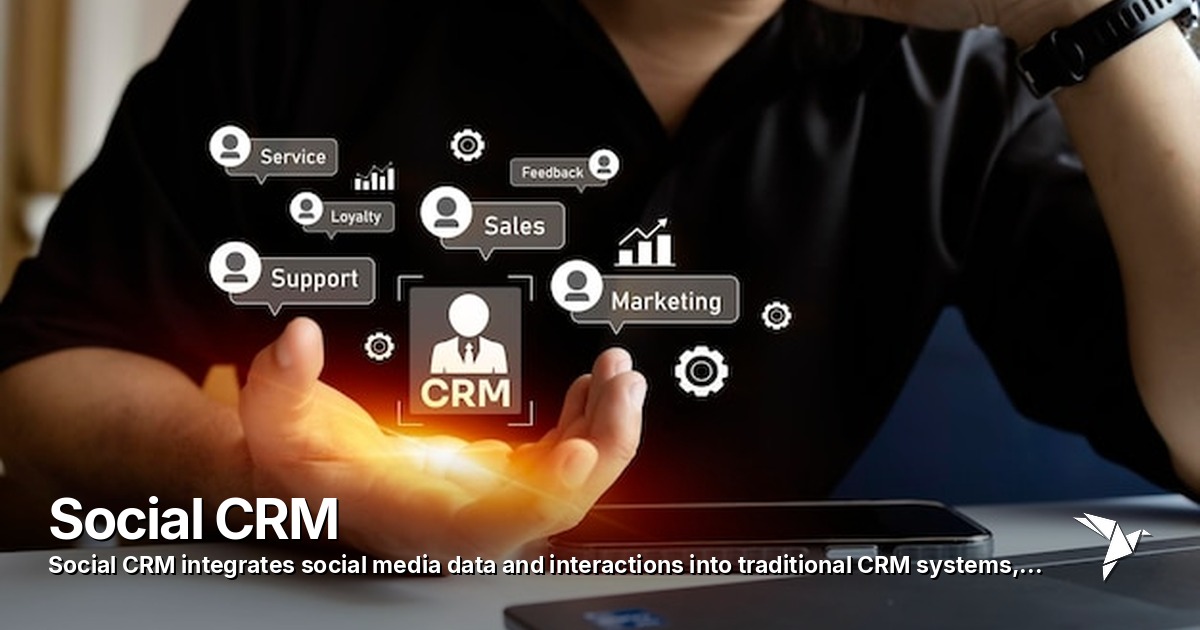
CRM strategy that combines social media interactions with customer data for personalized engagement and relationship building.
Key Points
- ✓Integrates social media conversations and sentiment data directly into traditional CRM systems for comprehensive customer profiles
- ✓Helps teams respond to customers faster than traditional methods and see how social engagement turns into leads, sales and retention
- ✓Focuses on real-time social listening and two-way dialogues rather than just transactional purchase data
- ✓Essential for modern customer care: 73% of social users will buy from a competitor if a brand doesn't respond on social (2025 Sprout Social Index)
Social CRM (Social Customer Relationship Management) represents a fundamental shift in how businesses approach customer relationships in the digital age. Unlike traditional CRM systems that focus primarily on transactional data, Social CRM integrates social media conversations, sentiment, and interactions directly into customer profiles, creating a comprehensive view of each customer's journey across multiple touchpoints.
How Social CRM Works
At its core, Social CRM pulls conversations from mentions, comments, and direct messages across platforms like Facebook, Instagram, Twitter/X, and LinkedIn into unified customer profiles 1. This integration allows marketing teams to link social activity with email communications, support tickets, and purchase history, providing crucial context for every customer interaction.
The system emphasizes social listening, sentiment analysis, and two-way dialogues to build deeper relationships and personalize experiences. Rather than simply tracking what customers buy, Social CRM focuses on understanding how they feel, what they're saying, and how they prefer to communicate 2.
Current Market Trends and Statistics
The adoption of Social CRM continues to accelerate as social media becomes the primary channel for customer service. The 2025 Sprout Social Index found that almost three in four social users (73%) will buy from a competitor if a brand doesn't respond on social, which is why customer care has become a core part of social CRM 5. Social CRM tools can help companies respond to customer inquiries faster than traditional methods.
Linking social conversations to CRM data lets teams see how engagement turns into leads, sales, or customer retention 4.
Implementation in Social Media Marketing
For social media marketers, Social CRM serves as the bridge between social engagement and business outcomes. The system automatically captures every comment, mention, and interaction, creating detailed customer profiles that inform future marketing strategies.
Campaign Personalization: Marketers use Social CRM data to create highly targeted campaigns based on social behavior patterns. For example, if the system identifies customers frequently engaging with fitness content on Instagram, marketers can develop personalized workout-related content and product recommendations.
Lead Generation and Scoring: Social CRM platforms automatically score leads based on social engagement levels, helping sales teams prioritize prospects who show genuine interest through their social interactions. This approach proves particularly effective for B2B companies using LinkedIn for relationship building.
Best Practices for Social CRM Success
Centralize All Social Data: Integrate every social channel into one unified CRM hub to eliminate data silos and enable seamless team collaboration. This centralization ensures that customer service, sales, and marketing teams all have access to the same comprehensive customer view.
Implement Real-Time Social Listening: Monitor brand mentions, hashtags, and sentiment in real-time to identify urgent customer issues and opportunities for engagement. Aim for response times under one hour for optimal customer satisfaction 1.
Automate Routine Tasks: Use automation for lead assignment, initial responses, and data entry while maintaining human oversight for complex customer issues. This balance ensures efficiency without sacrificing the personal touch that customers value.
Measure ROI Through Analytics: Track key metrics including engagement rates, conversion from social leads, customer lifetime value, and Net Promoter Scores. Use your analytics dashboard to demonstrate the business impact of social engagement efforts.
Tools and Platform Integration
Leading Social CRM platforms include Hootsuite for comprehensive social media management with CRM integration, Salesforce Social CRM for enterprise-level multichannel integration, and Freshworks CRM for automation and advanced analytics capabilities. These platforms often integrate with social media management tools like Canva for content creation and scheduling.
For businesses using Publora, Social CRM integration can enhance your social media management by providing deeper insights into audience behavior and enabling more personalized content strategies across all managed accounts.
Real-World Success Stories
Social CRM lets brands turn social conversations into customer relationships. A sportswear brand, for example, can track mentions across Instagram and Twitter/X and answer fitness-related questions with personalized workout tips, logging each interaction to the customer's profile.
Starbucks integrates Facebook messages into their CRM system via Salesforce, enabling them to resolve order issues quickly while gathering valuable sentiment data for menu development and loyalty program enhancements. This approach has significantly improved their customer satisfaction scores and repeat purchase rates.
Publora and Social CRM
Publora schedules posts to LinkedIn, X, Instagram, Threads, TikTok, YouTube, Facebook, Bluesky, Mastodon and Telegram from one calendar, the API or an AI agent.
See how Publora works →