Social Media Automation for Startups: What to Automate First
TL;DR
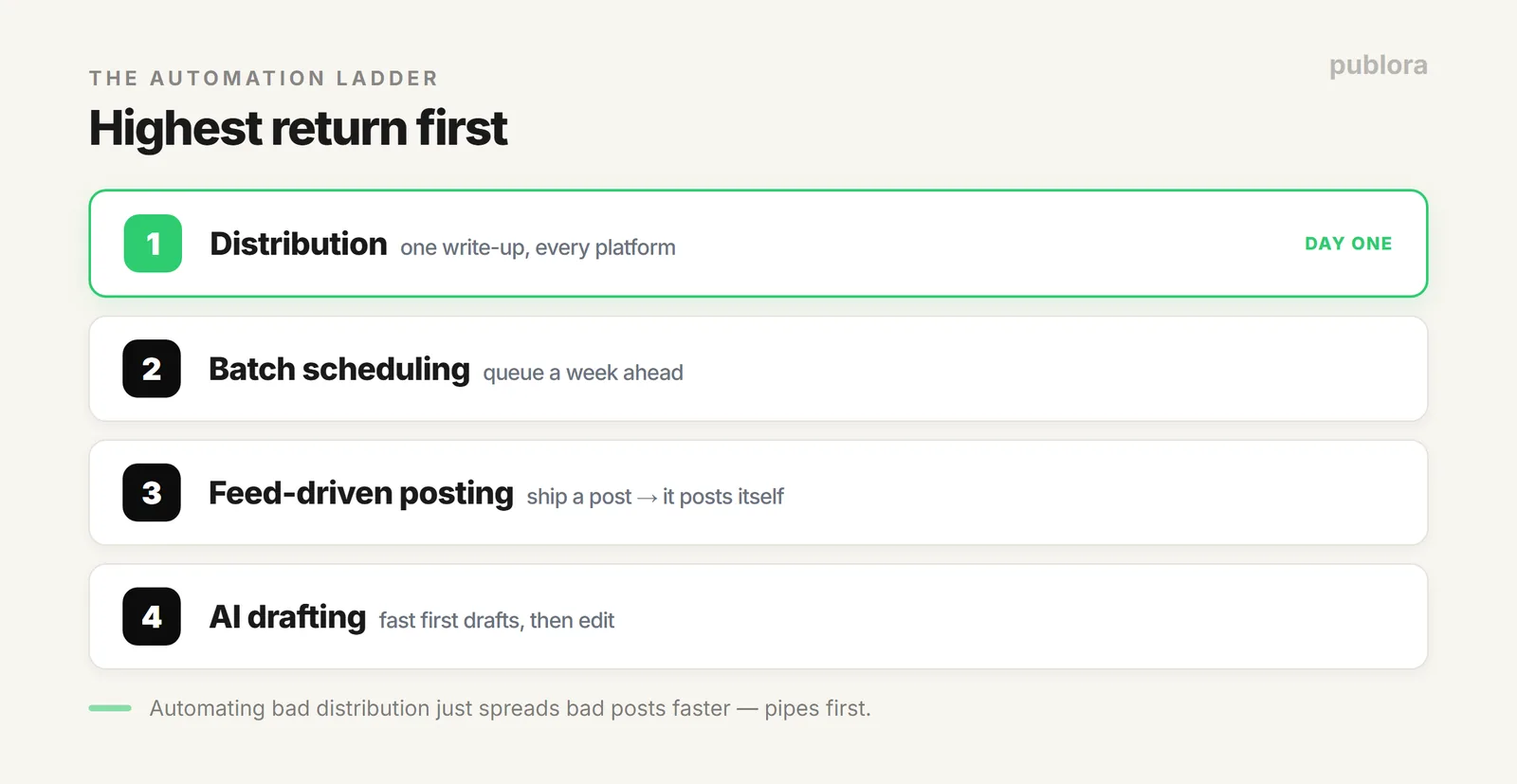
A startup can't automate everything at once. Here's the order that matters: distribution first, then scheduling, then feed-driven posting, then AI drafting.
Startups love the word "automate," but a five-person team can't automate everything at once, and shouldn't try. Automation has an order of return. Do the highest-leverage thing first, get the time back, then move down the list. Here's the sequence that actually pays off for a startup, and what to skip until later.
Automate in This Order
1. Distribution (Do This First)
The single highest-leverage automation is the least glamorous: stop manually reposting the same content to each platform. Write once, publish to all your channels in one action. A startup makes one good announcement and it should hit LinkedIn, Threads, Bluesky, and the rest without a human copy-pasting five times. Publora publishes to ten platforms from a single action, so distribution is one step, not five. This is the win you take on day one.
2. Scheduling in Batches
Next, stop posting in real time. Set aside one block, queue a week or two ahead, and let it run. This protects your calendar from the "did anyone post today?" scramble and keeps you consistent through busy launch weeks. It's cheap to adopt and immediately frees the team's attention for building.
3. Feed-Driven Posting (When You Have an API)
Once distribution and scheduling are handled, automate the trigger. When you ship a blog post or a product update, a small script reads it, drafts a caption, and posts, no one has to remember. It's the content-bot pattern pointed at your own output. This is where a tool with an API on the free plan matters: you can build it while pre-revenue, because Publora's API is included on every plan.
4. AI-Assisted Drafting (Last, Not First)
AI drafting is the shiny one, so startups reach for it first, but it's last for a reason. Automating bad distribution just spreads bad posts faster. Get the pipes right, then add AI to speed up first drafts, always edited into a human voice. Our guide to posts that don't sound like AI is the guardrail.
What to Skip For Now
| Skip early | Why |
|---|---|
| Fancy analytics dashboards | You don't have enough volume for the data to mean much yet |
| Per-platform micro-optimization | Consistency beats optimization until you have reach |
| Paid enterprise tools | Start free; pay only when a plan actually limits you |
Start Free, Scale Per Account
A pre-revenue startup shouldn't pay enterprise prices to post. Begin on a free plan that includes the API, so you can build the automation above without a bill, and move to per-account pricing only when you outgrow it. Publora's free Starter plan gives 3 accounts, 15 posts a month, and full API and MCP access; the paid tier is per account from about $2.99, so scaling costs a few dollars at a time, not a plan jump. That's the point of the order: each rung buys back time before it costs you anything.
FAQ
What should a startup automate first?
Distribution, cross-posting one piece of content to every platform in one action. Then batch scheduling, then feed-driven posting through an API, then AI drafting last.
Should an early startup pay for a tool?
Not at first. Start on a free plan that includes the API so you can automate pre-revenue. Publora's free Starter covers 3 accounts, 15 posts a month, and full API and MCP access.
How do startups automate posting from their blog?
With an API: a script reads a new post, drafts a caption, and publishes to every channel, the content-bot pattern pointed at your own output.
Automate the pipes, free
Publora's free Starter plan includes full API and MCP access, so a startup can automate distribution and feed-driven posting before it's spending a dollar. Scale per account later.
Start FreeFurther Reading
- Build a Content Bot: Feed to Caption to Auto-Publish
- What Is a Social Media Scheduling API?
- Social Media Scheduling for Solopreneurs
About the author. Written by the Publora team. Free-plan and API details reflect the live Publora product.
Related Articles
Social Media Manager Salary in 2026 (US Data by Experience)
US social media manager salaries in 2026 range from about $45k entry-level to $95k senior. Figures by experience, why sources disagree, and what moves the number.
From 1 Account to 50: How Publora Scales Without Scaling Your Bill
Most tools make growth expensive with tier jumps and per-seat fees. Here's how per-account pricing lets you go from 1 account to 50 on a straight, predictable line.
Social Media Management for Small Teams: Tools Under $20/Month
How a small team runs social media for under $20 a month: what to prioritize, why per-account pricing beats per-seat, and the setup that keeps everyone in sync.
Social Media Scheduling for Solopreneurs: Do More With Less
How a solopreneur runs consistent social media without it eating the week: batch once, automate with AI, and use a free plan that doesn't cap you too early.