Bulk Scheduling
The process of creating, uploading, and scheduling multiple social media posts at once across platforms using CSV/Excel imports for future publication over extended periods.
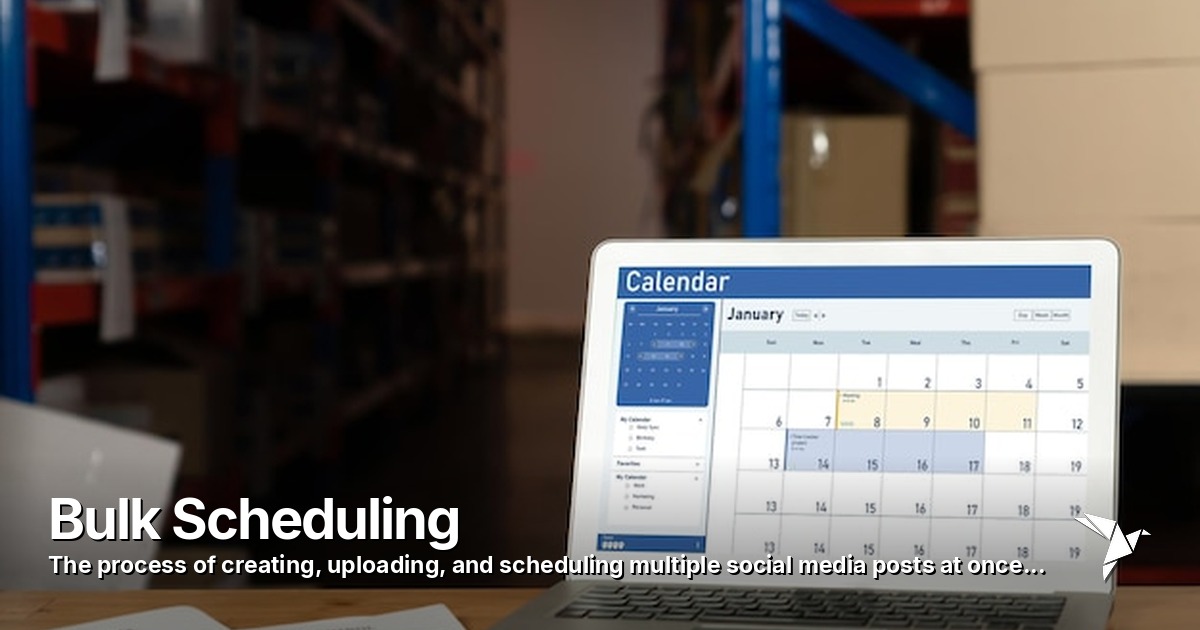
Upload and schedule hundreds of posts simultaneously across multiple platforms using spreadsheet imports, saving hours of manual work.
Key Points
- ✓Enables uploading and scheduling hundreds of posts simultaneously across multiple platforms using CSV/Excel imports
- ✓Makes a consistent posting cadence easier to maintain and lets teams time posts for peak audience activity
- ✓Supports enterprise-scale operations: Sprout Social, for example, imports up to 350 messages from a single CSV file
- ✓Requires strategic preparation including platform-specific customization, timing analysis, and performance monitoring
Bulk scheduling is a powerful social media management technique that allows marketers to upload and schedule multiple posts simultaneously across one or more platforms. This process typically involves importing content via CSV or Excel files, enabling teams to plan weeks or months of content in advance without the need for manual posting of each individual item 1.
How Bulk Scheduling Works
The bulk scheduling process begins with preparing a structured spreadsheet containing all necessary post elements: captions, media URLs, hashtags, publication dates and times, and target platforms. Modern social media management tools can process these files and automatically distribute content according to the specified schedule 2.
Tools such as Hootsuite and Sprout Social support bulk uploads, and Sprout lets teams import up to 350 messages from a single .CSV file 4. This scalability makes bulk scheduling particularly valuable for enterprise-level social media operations and agencies managing multiple client accounts.
Strategic Benefits for Social Media Marketing
Bulk scheduling improves marketing efficiency and consistency. Bulk scheduling makes a consistent posting cadence easier to maintain, which helps keep audiences engaged over time. This benefit stems from maintaining regular audience touchpoints and optimizing posting times across different time zones.
Enterprise implementations demonstrate the true power of bulk scheduling. In one customer example published by Sprinklr, a brand executed over 30,000 marketing posts in six months and improved asset reuse by 50% after centralizing its publishing workflow 2. These metrics highlight how bulk scheduling transforms social media from a time-intensive manual process into a strategic, scalable operation.
Implementation Best Practices
Successful bulk scheduling requires careful preparation and strategic thinking. Start by creating comprehensive spreadsheets with dedicated columns for each content element. Include fields for captions, media file paths, platform specifications, publication timestamps, and relevant hashtags 3.
Timing optimization is crucial for maximizing reach and engagement. Use platform analytics dashboards to identify peak audience activity periods, then space your bulk-scheduled posts accordingly. This approach ensures content reaches audiences when they're most likely to engage, rather than posting at arbitrary intervals 2.
Content variety prevents algorithmic penalties and audience fatigue. While bulk scheduling enables efficient content distribution, avoid scheduling identical posts across all platforms. Instead, customize captions and formats for each platform's unique audience expectations and technical requirements.
Platform-Specific Considerations
Different social media platforms require tailored approaches to bulk scheduling. Instagram posts benefit from visual consistency and strategic hashtag placement, while LinkedIn content should emphasize professional value and industry insights. Twitter/X requires concise messaging that fits character limits, and Facebook posts can accommodate longer-form content with rich media elements.
When bulk scheduling for multiple platforms simultaneously, consider each platform's optimal posting frequency. LinkedIn typically performs well with 3-5 posts per week, while Twitter/X can handle multiple daily posts. Instagram benefits from consistent daily posting, and Facebook performs well with 1-2 high-quality posts per day.
Advanced Features and Integrations
Modern bulk scheduling tools offer sophisticated features beyond basic post distribution. AI-powered content suggestions help optimize posting times and content themes based on historical performance data 3. Team collaboration features enable multiple stakeholders to review and approve bulk-scheduled content before publication.
Integration with broader marketing ecosystems enhances bulk scheduling effectiveness. Tools like HubSpot's Marketing Hub connect bulk scheduling with KPI tracking, lead generation, and customer relationship management, creating comprehensive marketing workflows that extend beyond social media posting.
Measuring Success and Optimization
Effective bulk scheduling requires ongoing performance monitoring and optimization. Track key metrics including engagement rates, reach, click-through rates, and conversion data for bulk-scheduled content. Compare these metrics against manually posted content to validate the effectiveness of your bulk scheduling strategy.
Use A/B testing within your bulk scheduling approach by creating variations of similar posts with different timing, captions, or media elements. This data-driven approach helps refine future bulk scheduling campaigns and improves overall social media performance.
Regular analysis of bulk-scheduled content performance also reveals optimal content themes, posting frequencies, and audience preferences. These insights inform future content creation and scheduling strategies, creating a continuous improvement cycle that maximizes social media ROI.
Publora and Bulk Scheduling
Publora schedules posts to LinkedIn, X, Instagram, Threads, TikTok, YouTube, Facebook, Bluesky, Mastodon and Telegram from one calendar, the API or an AI agent.
See how Publora works →